
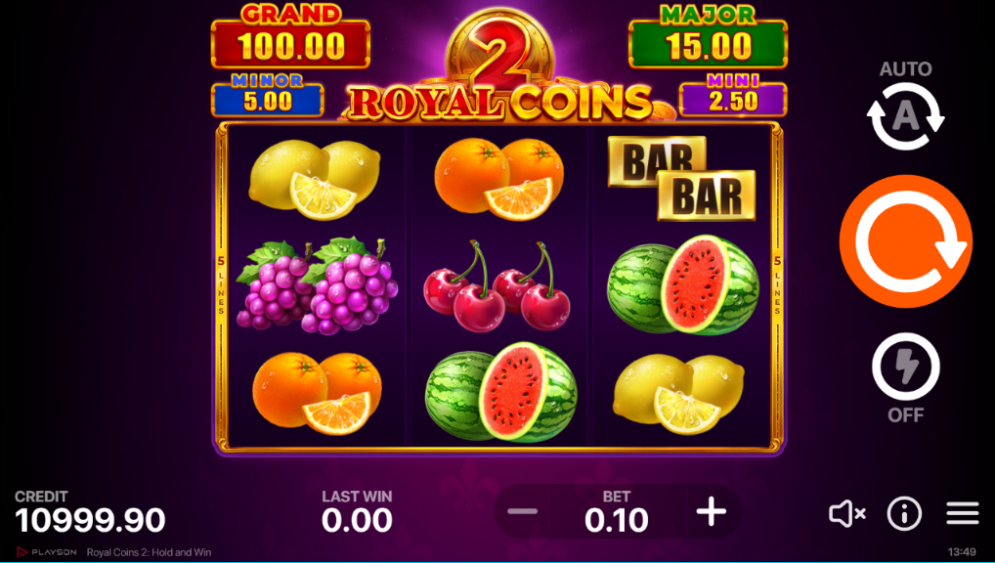
Rarely have innovations transformed slot gameplay as significantly as the cascading reels mechanic. In place of a static spin where symbols lock into place, cascading reels remove winning combinations from the grid and allow fresh symbols to tumble down, possibly creating new wins in a single paid round. One slot that harnesses this mechanic with exceptional flair is Hold and Win Games, a title that blends chain-reaction tumbles with a sticky cash-collect feature. Users who grasp how cascade sequences activate, multiply winnings, and feed bonus rounds obtain a sharper edge when they begin a session. This guide unpacks every layer of the cascading reels engine inside Hold and Win Games while also illuminating how the feature works with volatility, payline structures, and hold-style prizes.
The Hold and Win Respins Feature in Detail
The key attraction, and the namesake of the game, is the Hold and Win respins bonus. Different from the main game’s tumble mechanic, this mode pauses the tumble system and transitions to a sticky-symbol collection board. When six or more gleaming gold coin symbols land on the reels during a cascade cycle, the regular reels vanish, the activating coins become sticky, and the player gets three extra spins. Each new coin symbol that lands remains on the grid and restores the respin counter to three. The round continues until either no respins remain or all 15 positions fill with coins.
At the end of the feature, every coin displays a cash amount or a jackpot tier, and the sum is credited to the player’s balance. Three jackpot levels — Mini, Major, and Grand — are tied to set multipliers of total stake, with the Grand typically offering 2,000x. Filling all 15 positions with coins awards the Grand Jackpot outright, a goal that fuels excitement every time the screen approaches saturation. Because the bonus coins can land during any cascade within a single spin, the base game effectively acts as a delivery mechanism for the respins mode, making every cascade a potential bonus-entry event.
Developers and Comparable Slots
The tumbling reels feature has been made popular by providers such as NetEnt, Microgaming, and Playson, and Hold and Win Games fits within a tradition that contains games like Gonzo’s Quest, Reactoonz, and Bonanza. As opposed to endless multiplier grid slots, this game employs a more disciplined cascade system combined with a payline structure, which many players find easier to track. The Hold and Win mechanic, meanwhile, is most commonly linked with Playson’s and iSoftBet’s catalogs, but many other providers have embraced the lock-and-respin model. The combination of both mechanics in one product is more uncommon, which enables Hold and Win Games differentiate itself from single-feature cascade slots.
Players keen on discovering similar slots should look for games that explicitly list “cascading reels” or “avalanche” in the feature description and also advertise a hold-and-win jackpot round. Evaluating the RTP and max win caps across slots will show how this hybrid design changes the risk-reward balance. In many cascade-only slots, the top prize is tied to the multiplier trail; in see here, the respins bonus accounts for a considerable share of the maximum potential, suggesting the overall win distribution appears less reliant on a single long cascade streak and more anchored to the special bonus trigger. This dual method can attract players who enjoy both continuous chain reactions and the anticipation of a dedicated bonus board.
Common Misconceptions About Cascading Reels
One persistent myth is that cascading reels guarantee dead-spin recovery because losses are succeeded by automatic extra chances. While the mechanic delivers multiple evaluations per stake, it does not alter the underlying RNG distribution. A spin with no initial win halts at once, just like a static slot. The cascade occurs only when a win occurs, so players who think they are “due” a cascade run because of previous cold spins are misinterpreting the independent nature of each round. Another misconception is that the speed of the tumble animation can be adjusted to influence outcomes; in reality, the visual pace has zero connection to the result, which is determined server-side the moment the spin button is pressed. this guide
Some players also suppose that higher bets raise the frequency of cascade chains. While a larger stake increases the absolute value of wins and potential bonus prizes, it does not alter the hit frequency of tumbling sequences. The RTP and mathematical model stay the same across the entire bet range. Finally, beginners often mix up the Hold and Win sticky-symbol round with the cascading feature, believing the respins are part of the same tumble mechanic. It is useful to remember that cascades build wins in the base game and free spins, while the Hold and Win bonus replaces the cascade grid with a sticky-collection panel that works on completely different rules.
Design and Visual Presentation of Hold and Win Games
Hold & Win Games encloses the cascade engine inside a lively, gem-encrusted treasury theme. The reels are set against a vault backdrop, with gold coin stacks, diamond clusters, ruby sevens, and bell symbols gleaming under subtle animated light. Winning tumbles are followed by a pleasing shatter effect, where symbols break apart before new stones rain down. The audio design strengthens the momentum: a low rhythmic pulse during normal spins grows into a percussive flourish on each cascade, culminating when a bonus is triggered. While the visual language is lavish, the interface remains uncluttered, displaying the current cascade count in a small counter on the right of the screen so players always know how deep a tumble run has become.
The colour palette leans heavily on deep royal blues and golds, providing the game a top-tier, vault-like atmosphere without obscuring the symbol legibility. High-value icons are immediately distinguishable from low-pay card ranks, which are styled as jewel-encrusted letters. This clarity is important because cascading reels can move quickly, and players need to recognize incoming scatter symbols or special bonus coins at a glance. The developers have deliberately kept the background relatively static during tumbles to avoid motion blur, making sure that the cascade action remains legible even when consecutive drops fire in rapid succession.
Free Spins Feature and Multiplier Mechanics
Hitting three scatter symbols simultaneously — on the first grid or across multiple cascade drops inside a single spin — gives 10 free spins. During the bonus, the reel set remains identical, but the cascade multiplier trail gets more aggressive. Rather than starting at 1x, the first cascade already has a 2x boost, and the fifth consecutive tumble activates a 10x multiplier that can reshape a round’s outcome significantly. Retriggers are possible: three scatters throughout the free games grant five extra spins, and additional wild multipliers appear with greater frequency, making extended free-spin sessions the most explosive segment of the game.
Multiplier boosts work with wilds in a especially potent way. When a wild symbol plays a part to a win and also possesses a multiplier, that multiplier is added to the full line payout before cascade clearing begins. In later tumble stages, a single 3x wild can team up with the cascade multiplier trail, producing payouts that compound on themselves. Users should note that multiplier wilds only appear during free spins and do not substitute for bonus coins, so the Hold and Win feature cannot be triggered within the free-games round. This separation keeps both bonuses distinct and avoids feature overlap that would confuse the payout calculation.
Optimizing Sessions Around the Cascade Mechanic
As every base spin can explode into a series of tumbling wins, bankroll management needs to account for both the speed of play and the volatility spikes. A common approach is to establish a session budget that covers at least 150 to 200 spins, giving enough runway for the bonus frequency to manifest without chasing. Players who favor shorter, high-intensity sessions might size bets larger but use conservative loss limits, acknowledging that the cascade multiplier trail can produce outsized returns on a small number of spins. Watching for the four-cascade threshold — where multipliers begin — is a practical trigger for deciding whether to continue autoplay or switch to manual spins.
It is also recommended adjusting expectations around the Hold and Win trigger. The bonus coins must appear during a cascade sequence, so spins that fail to generate any tumble cannot trigger the feature. Some players misread a quiet period as a signal that the bonus is “close,” but the correct interpretation is simply that the cascade engine has not engaged yet. Because the bonuses are independent of one another, a lengthy dry spell does not mathematically boost the probability of an imminent trigger. The most disciplined players consider each spin — and each cascade within it — as an isolated event while enjoying the spectacle of a multi-tumble run when it happens.
Cascading reels are one of the most rewarding mechanical evolutions in modern slot design, and Hold and Win Games converts that engine into a complete experience by merging it with a high-stakes sticky-symbol bonus. The result is a slot that teaches players to track every symbol drop, assess the value of a multi-cascade streak, and appreciate the distinct risk profiles of the main game and the respins round. Anyone playing this title should start small, examine the cascade multiplier trail in action, and never assume a tumble has ended just because the visuals pause for a moment — because in a well-built cascade slot, the next symbol drop can change everything.
Feature Overview Overview
Hold-and-Win Games layers several bonus elements on top of the cascade engine to establish depth. The core appeal is the Hold and Win respins bonus, but the game also includes wild multipliers, scatter-triggered free spins, and a special cascade-powered win multiplier that can expand during a single tumble sequence. This interlocking design ensures that a late-stage cascade can suddenly escalate when a multiplier wild appears into a winning line, turning a small hit into a substantial payout without any warning. The slot aims to feel both familiar and surprising because players often assume the tumble has ended only for a fresh wild or scatter to reset expectations.
- Hold and Win Respin Feature: initiated by landing six or more bonus coin symbols anywhere during a cascade sequence; coins hold for three respins and reset the counter each time a new coin lands.
- Free Spins with Multiplier Wilds: triggered by three scatter bells; grants 10 free games where every wild holds a 2x or 3x multiplier and cascades remain active.
- Cascade Multiplier Trail: during base-game tumbles, consecutive wins of at least four cascades use a growing multiplier of 2x, 3x, and 5x, ending when the sequence ends.
How to Enjoy Hold and Win Games Step by Step
Starting a session involves a few simple actions that leverage the cascade mechanic from the very first click. Players should first identify the total bet adjuster, often marked with a chip icon, and browse through the available stake levels. The display will immediately show the new bet per spin, and it is recommended to confirm that the amount aligns with a planned session bankroll before spinning. With the bet set, pressing the central spin button launches the reels. The game will automatically resolve all cascades, so there is no need for manual intervention during tumbling sequences. The balance updates continuously as each cascade win is computed.
Participants who want to observe the build-up without repeated clicks can enable the autoplay function, choosing a number of spins, loss limits, or single-win stop conditions. It is important, however, to supervise autoplay when pursuing the Hold and Win bonus because autoplay will not pause when the feature triggers; it will carry out the respins round automatically. The paytable, accessed via the menu icon, displays the payout for each symbol combination, the rules for multipliers, and the jackpot values. Studying the paytable before committing real funds is strongly advised, especially to comprehend which symbols act as scatters and which as bonus coins during cascade sequences.
Wagering Range and Top Win Potential
The betting range in Hold and Win Games is crafted to accommodate careful players and high-stakes enthusiasts alike. Total bet per spin commences at a small floor, typically 0.20 credits, and goes up to a cap of 100 credits, with a series of fixed multipliers in between. These steps let players change risk step by step without ever having to adjust coin values or line counts manually. Because every spin encompasses the full set of paylines, the indicated bet is the complete cost of one cascade cycle, and any following tumbles are provided at no extra charge — an important point that novices sometimes get wrong.
The max win is advertised as up to 5,000 times the total stake, a number that can be attained either through an extremely long cascade run in the base game or, more convincingly, during the Hold and Win feature when premium cash symbols lock and accumulate. While the cap is not increasing, its scale is comparable for a average-grid cascade slot. Players should review the in-game paytable for the exact max win value and confirm whether the cap applies per spin or across a bonus feature, as these particulars can vary between different releases and markets. Monitoring the cascade multiplier, when active, is the clearest path to pursuing that upper-bound payout.
Return to Player and Volatility Profile
Hold and Win Games ships with a return-to-player percentage that typically https://bleacherreport.com/articles/10085543-espn-bet-sportsbook-to-launch-in-fall-2023-after-agreement-with-penn-entertainment lies in the 96.2% to 96.4% range, depending on the operator configuration. This puts it right in the sweet spot for a modern video slot — neither so low that the house edge feels punitive, nor so high that the top prizes lose their impact. The cascading reels engine is a key element to the volatility profile, which is rated high. Consecutive tumbles can deplete a balance quickly during a cold sequence, but the same mechanism can also provide a multi-stage win that resets a session in a single spin when the right symbols combine.
Volatility in cascade slots is rarely simple. Because a single paid round can contain zero, one, or many individual win evaluations, the distribution of results is wider than in a non-cascade game with an identical paytable. Hold and Win Games manages this through frequent small-to-medium cascade runs during base play, but the real volatility spike is reserved for the Hold and Win bonus mode, where cascades are stopped and sticky symbols take over. Players who want to assess the game’s rhythm should track how many spins produce at least three consecutive tumbles, as this metric often hints at whether the session is trending hot or cold before the bonus round lands.
How Cascading Reels Truly Work
At its core, a cascading reel system removes winning symbols after a payout is awarded, then drops down the symbols above to fill the gaps. Empty positions are replenished from the top of the grid, creating a brand-new arrangement without requiring an additional bet. If the new setup includes a further winning combination, the process repeats. These chain reactions persist until no wins remain on screen. In Hold and Win Games, the mechanic is tuned to deliver rapid sequences where one initial line hit can cascade into three, five, or occasionally a dozen consecutive wins. Every cascade is still part of the same base spin, so the total prize builds up across the entire tumble cycle.
The technical trigger is simple: the software evaluates the grid against the active paylines, and any matching combos of at least three identical symbols that start from the leftmost reel are paid. Those winning positions are removed, gravity drops the residual symbols, and new ones enter. The game does again the check automatically. Because each cascade counts as a new evaluation, scatter symbols and bonus triggers can also land mid-sequence, making the feature much more than a cosmetic effect. Understanding this flow is the first step towards understanding why cascading games often feel more volatile and more rewarding than their static counterparts.
Why the Mechanic Matters for Player Strategy
Falling reels change the bankroll flow of a slot. A typical 25-payline machine provides one outcome per spin; a cascade title can provide multiple sequential results, which condenses a higher count of micro-events into a briefer period. For players, this signifies the gap between dry spells and winning clusters can feel sharper. In Hold and Win Games, the cascades are not just eye candy — they are the delivery system for the slot’s most valuable moments, including the Hold and Win bonus activation. Pursuing a bonus often depends on special symbols arriving during a chain reaction, so players come to understand to watch every cascade as a new chance rather than a replay of the previous result.
The mechanic also impacts bet-sizing decisions. Since a single stake can fund several win evaluations, the actual cost per evaluation is reduced, yet the volatility per spin can jump when multipliers or sticky symbols come into the equation. Players who like a steady drip of small wins will need to adapt expectations because cascade slots often trade frequent dead spins for the chance of one explosive multi-tumble sequence. Hold and Win Games leans into this trade-off, paying off patience with the possibility of linking a base-game cascade into a bonus-triggering scatter landing, which then opens the hold-and-respin board where cascades typically pause in favor of sticky symbol mechanics.
Reels with Rows and Methods to Win
The base grid in Hold and Win titles uses a familiar five-reel, three-row configuration, but the payout potential goes far beyond a fixed-line layout. In place of conventional paylines, the slot features a 20-line structure that payouts left-to-right on chosen paths, and any winning line starts a cascade. The blend of a tight grid and cascading reactions means a single base bet can generate several winning lines across distinct drop phases. As the paylines are fixed, players do not need to worry about changing active lines; each spin encompasses all 20 paths. This setup holds the wager per spin consistent while allowing cascades to activate several line hits in rapid succession.
The five-by-three format is a intentional choice. Larger grids can create more cascade possibilities but often dilute the impact of individual line hits. Here, the compact layout concentrates symbols, allowing it to be easier for scatters and bonus tokens to appear mid-tumble. The game also illustrates that cascade mechanics do not demand grid-slot “ways-to-win” systems to work effectively. The fixed payline approach provides players a clear concept of how wins occur, but the cascades introduce a level of complexity that maintains the result of any individual spin uncertain and sometimes explosive. Bet labels, spin button, and autoplay configurations are placed below the reels, making the grid itself spacious.